

Fully Automatic Paint Spraying Production Line
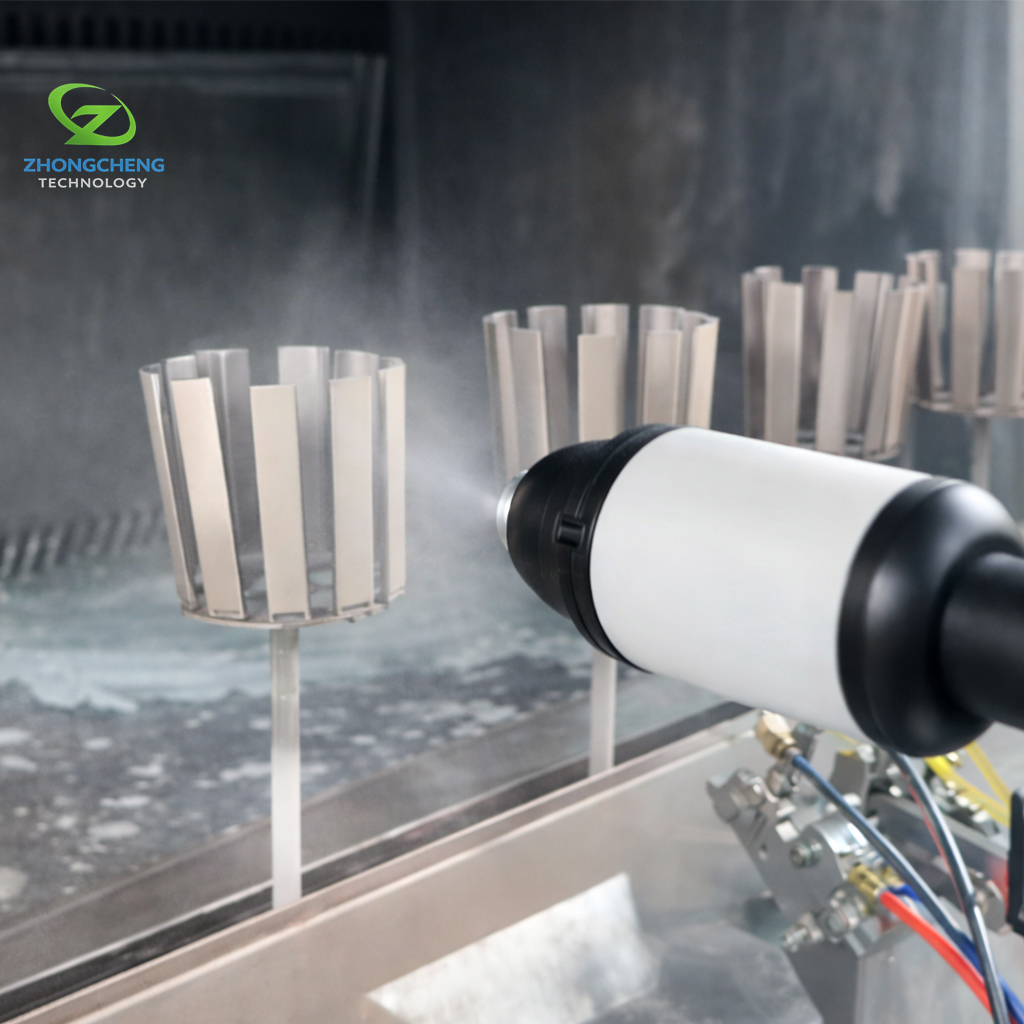
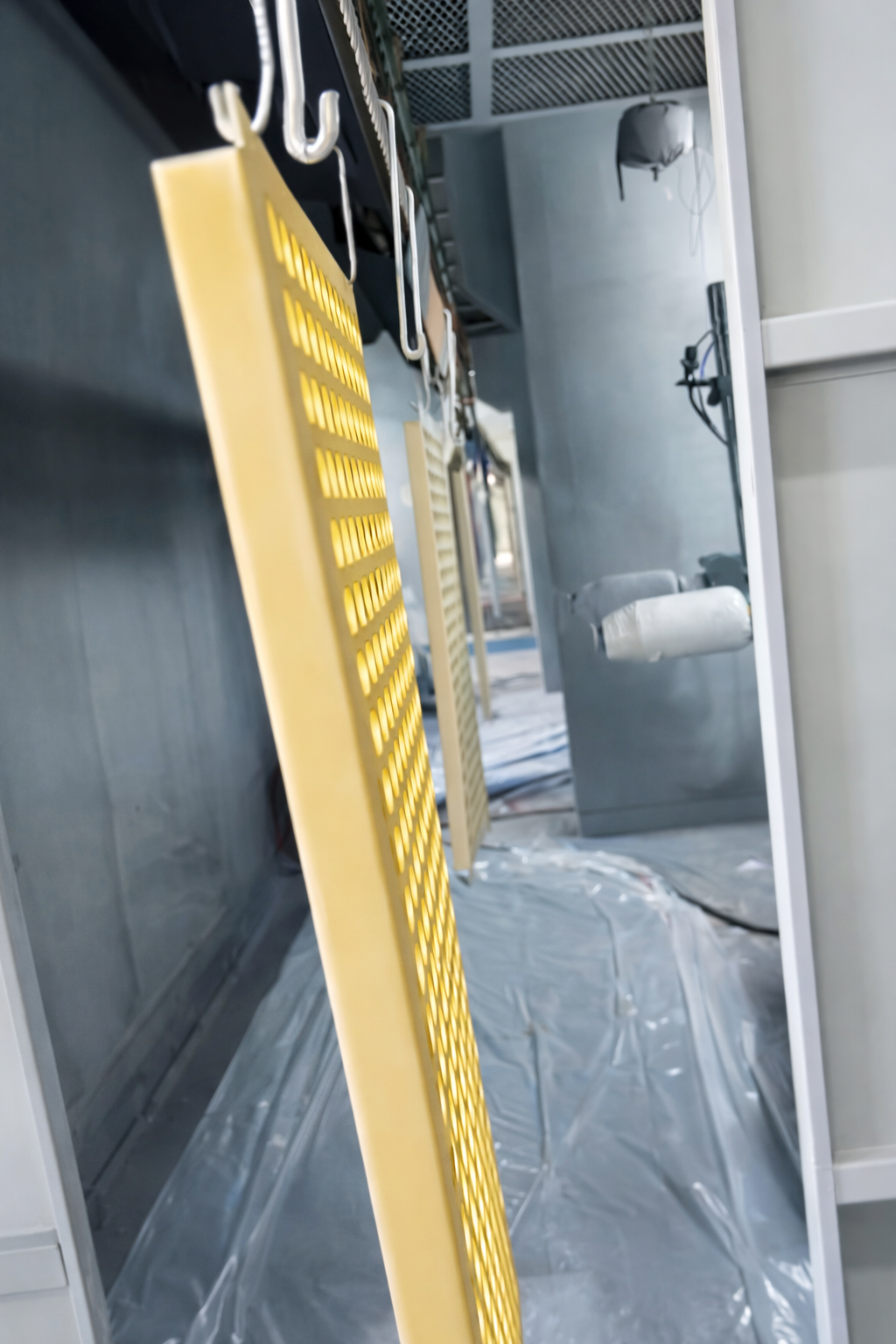

Fully automatic painting production lines are widely used in various industrial coatings, especially for painting on automobiles, household appliances, electronic products, and metal surfaces. They can precisely and efficiently complete the entire coating process from pretreatment to painting through an automated control system, ensuring coating quality while improving production efficiency.
1. Pretreatment Stage
Pretreatment is the first step in the painting process, aimed at removing dirt, grease, rust, and other impurities from the workpiece surface to provide good adhesion for coating. The quality of pretreatment directly affects the final coating quality. The pretreatment stage typically includes the following steps:
– Cleaning: Using chemical cleaners or water cleaning equipment to remove oil, dust, and other impurities from the workpiece surface.
– Rust Removal: For metal workpieces, removing surface rust is necessary. Methods such as acid washing or sandblasting are commonly used.
– Phosphating: Forming a phosphate film on the metal surface through a chemical reaction to enhance coating adhesion and prevent rust.
– Drying: The workpiece surface must be dried to remove moisture and cleaning agent residues, ensuring subsequent painting effectiveness. The pretreatment stage ensures the workpiece surface is clean and smooth, ready for the painting process.
2. Painting Stage: Principles of Automated Painting
The painting stage is the core of a fully automated painting production line, using automated equipment and spraying systems to apply coatings evenly. The core principle of spraying is to use high-pressure spray guns to evenly distribute the paint on the workpiece surface and ensure coating quality through precise control.
Automated Spraying System:
– Spray Gun Control: The spray gun is connected to an automated control system, precisely controlling the amount, angle, and speed of paint spray to ensure an even, defect-free coating. Compressed air is typically used to spray the paint onto the workpiece.
– High-Pressure Spraying: Spray guns generally provide high-pressure airflow to accelerate the paint. The nozzle inside the spray gun creates a fine mist, ensuring even coating adherence on the workpiece.
Spraying Control:
– Automated System: The spraying process is precisely controlled by automated systems, such as PLCs (Programmable Logic Controllers). The system automatically adjusts spraying parameters—such as paint volume, spray gun speed, and spray angle—based on the type of workpiece and surface requirements.
– Robotic Spraying: For more complex workpieces, industrial robots are usually used instead of manual operation. Robots can precisely follow a programmed path in 3D space to ensure an even coating without blind spots.
Electrostatic Spraying (if applicable):
– Electrostatic Principle: In certain spraying processes, paint particles are charged through a high-voltage power supply, while the workpiece is usually grounded or carries an opposite charge. The paint particles are then attracted to the workpiece by electrostatic force, ensuring uniformity and adhesion. Electrostatic spraying not only reduces waste but also improves coating quality.
3. Drying and Curing Stage
After spraying is completed, the coating usually needs to be cured through heating. The curing process allows the coating to firmly bond with the surface of the workpiece, forming a hard and durable layer.
Drying and curing:
Oven heating: The sprayed workpieces enter a curing oven, typically at temperatures between 50-100°C. Heating softens and levels the coating, ensuring an even layer.
Curing reaction: At high temperatures, the resin and curing agents in the coating undergo a chemical reaction to form a cross-linked structure. This makes the coating hard and enhances its scratch resistance and corrosion resistance.
Cooling: The cured workpieces usually pass through a cooling zone to lower the temperature, ensuring the coating remains stable during cooling and preventing cracks or deformation.
4. Quality Inspection and Post-Processing
To ensure coating quality, all coated workpieces undergo quality inspection after spraying and curing. These inspections ensure that the coating meets standards and customer requirements.
Quality Inspection:
Visual inspection: Check whether the coating is even and free of defects such as bubbles, sagging, or scratches.
Coating thickness measurement: Use a coating thickness gauge to check the thickness of the coating, ensuring it meets the specified standards.
Adhesion testing: Check the adhesion of the coating to the workpiece surface through tensile or scratch tests, ensuring the coating does not peel off.
Color consistency testing: For workpieces requiring consistent color, perform color difference tests to ensure uniform coating color.
Post-Processing:
Sanding and touch-up: Coatings with defects can be corrected through sanding, patching, or other methods, ensuring a smooth, flawless surface.
Packaging and shipment: Qualified workpieces are packaged and prepared for delivery to customers.
5. Automated Control and Intelligent Management
Fully automated painting production lines are typically equipped with highly automated and intelligent control systems, making the production process more precise and efficient. The intelligent management system includes the following features:
Data monitoring and analysis: The production line is equipped with sensors and monitoring systems to track various data in real time during the spraying process, such as spraying amount, coating thickness, temperature, etc., and automatically adjust parameters to ensure coating quality.
Energy Saving and Environmental Protection: Automated control systems can adjust energy consumption according to the different requirements of workpieces and production progress, reducing waste and emissions, in compliance with environmental standards.
Improved Production Efficiency: Fully automated systems reduce manual intervention, enhance production efficiency and product consistency, and can flexibly adjust the production pace according to demand to meet varying coating needs.
The fully automated paint production line, through automated control systems, precise spraying processes, and curing processes, can achieve efficient and high-quality coating. While ensuring coating quality, it greatly improves production efficiency. With highly integrated equipment and intelligent management, the fully automated paint production line can minimize human error, enhance coating consistency, and is widely used in the automotive, home appliance, electronics, and metal processing industries, adapting to different coating requirements.