

Powder Coating Curing Oven
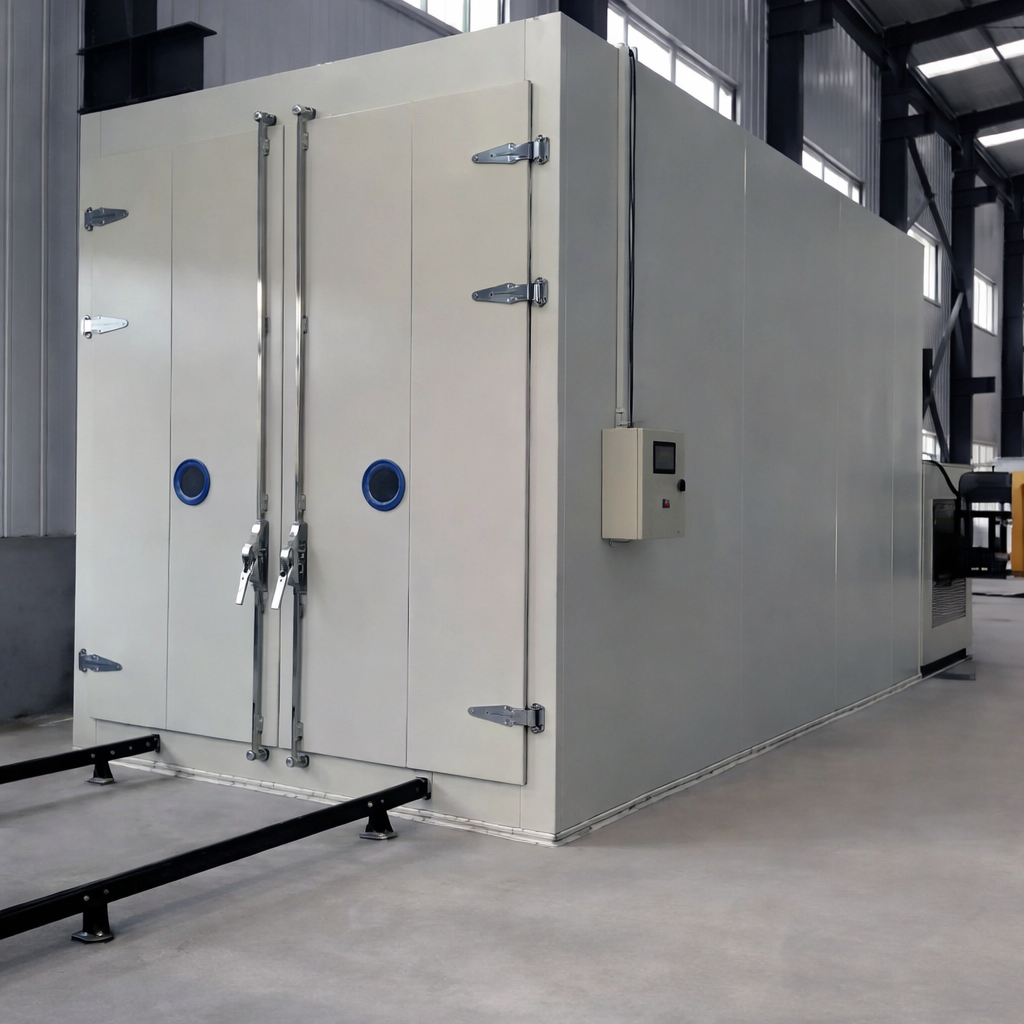
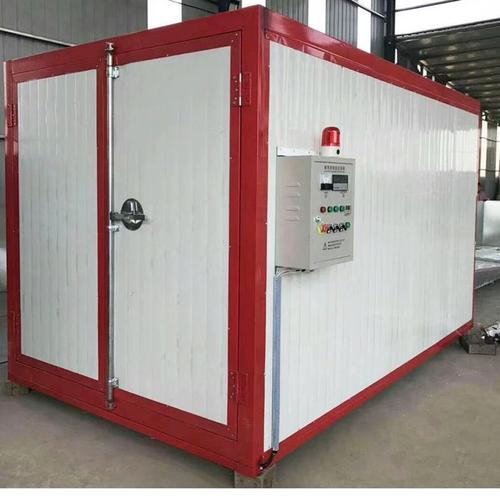
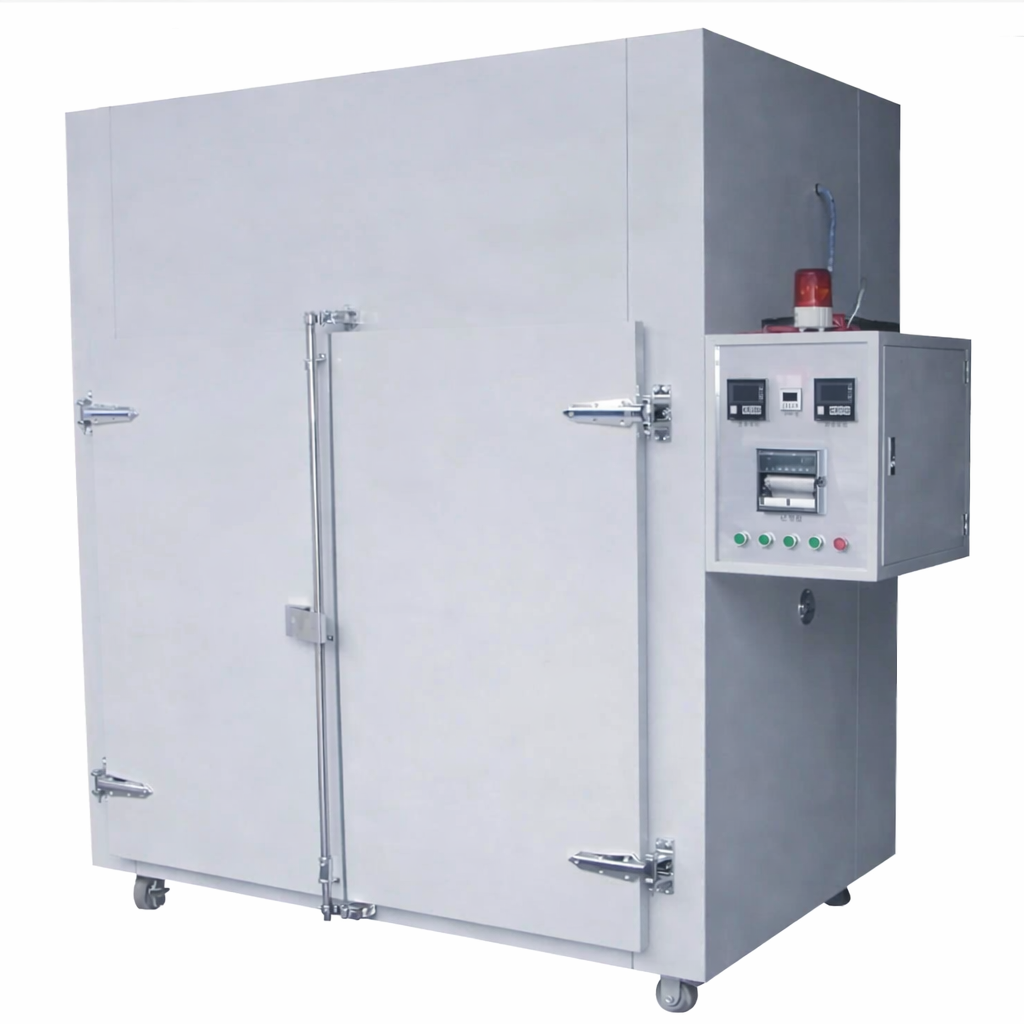
Powder coating curing ovens are one of the key pieces of equipment in a powder coating production line. They are mainly used to heat and cure sprayed workpieces, allowing the coating to achieve the desired hardness and durability. The curing process not only ensures the visual quality of the coating but also provides corrosion resistance, scratch resistance, and weather resistance.
1. Curing Principle
Powder coatings are heated and cured in a curing oven. Curing is a chemical reaction process in which the resin and curing agent in the coating undergo a cross-linking reaction at high temperatures to form a hard coating. The principle of the curing process is as follows:
Heat Curing: After coating, the workpieces enter the curing oven. During heating, the resin and curing agent in the powder coating begin to react, forming a cross-linked structure. This cross-linking reaction strengthens the molecular chains of the coating, enhancing the durability and scratch resistance of the coating.
Chemical Cross-Linking: At high temperatures, the resin and curing agent in the powder coating chemically cross-link to form a hard and durable coating. Typically, the curing temperature ranges from 160°C to 200°C, and the curing time is generally 15 to 30 minutes, depending on the type of coating and the thickness of the workpiece.
Physical Changes: Besides chemical cross-linking, curing is also accompanied by physical changes, as the powder coating transforms from its initial powder state into a hard, smooth coating.
2. Structure and Working Process of the Curing Oven
Curing ovens typically consist of a temperature control system, an air circulation system, and a heating device. Their main function is to provide a stable temperature environment, ensuring that the workpiece surfaces are uniformly heated, thereby achieving even curing of the powder coating. The structure and working process of the curing oven are as follows:
Heating Device:
Heating Method: Curing ovens typically use electric heating, gas heating, or steam heating. Electric heating is common in small ovens, while gas heating is more often used in large-scale production. The heating device raises the internal temperature of the curing oven to the required curing temperature (usually 160-200°C) via heating elements.
Temperature Control System: The interior of the curing oven is equipped with temperature sensors and an automatic control system. By monitoring the temperature inside the oven, the system ensures the heating elements maintain a constant temperature. The system automatically adjusts the operation of the heating elements according to preset temperature requirements to ensure stable temperatures during the curing process.
Air Circulation System:
Airflow Circulation: The curing oven is equipped with an air circulation device, which uses fans or blowers to circulate hot air throughout the oven. This helps distribute heated air evenly across the surface of the workpieces, ensuring each part reaches the same curing temperature.
Temperature Uniformity: The air circulation system helps eliminate local areas of excessively high or low temperature, ensuring even heating across all parts of the workpiece surface and preventing uneven coating or cracking due to temperature differences.
Precise Control: The curing chamber achieves precise temperature control through a built-in temperature control system, ensuring that the workpiece does not overheat or cool during the curing process. Excessive temperatures can cause the coating to sag or discolor, while too low temperatures can lead to incomplete curing, affecting the coating’s performance.
Curing Time and Temperature Matching: Different types of powder coatings have different requirements for curing temperature and time, and the temperature control system of the curing chamber can automatically adjust according to the requirements of different coatings to ensure the best curing effect.
3. Curing process
After the powder-coated workpiece enters the curing chamber, it undergoes a series of heating and chemical reactions to complete the curing process. The specific steps are as follows:
Preheating stage: After the workpiece enters the curing box, it first goes through the preheating stage. The purpose of the preheating process is to remove moisture and solvents from the surface of the workpiece, preparing it for a cured state. At this time, the temperature is usually lower, around 100°C.
Curing Phase: After reaching the desired temperature for curing, the workpiece continues to remain in a constant high-temperature environment for a certain period of time. The temperature is usually between 160-200°C, and the curing time is usually 15-30 minutes depending on the thickness of the coating and the type of coating. At this point, the resin in the powder coating begins to react with the hardener to form a hard coating.
Cooling stage: After curing, the workpiece needs to be gradually cooled down through the cooling zone to avoid cracking or deformation of the coating caused by excessive temperature differences. The cooling phase contributes to the further stabilization of the cured layer, allowing it to achieve optimal hardness and durability.
4. Advantages and characteristics of curing box
The role of curing chambers in powder coating is crucial, offering the following benefits and features:
Precise Temperature Control: Through advanced temperature control systems, the curing chamber can maintain stable temperatures, ensuring uniform curing of the coating on each workpiece.
Energy Efficient and Efficient: Modern curing chambers feature efficient heating devices and air circulation systems that minimize energy consumption and accelerate the coating curing process.
Environmentally friendly: The curing process does not release harmful gases, so the curing box is suitable for production environments with high environmental requirements.
Increased Production Efficiency: Ease of operation due to the automatic control of temperature and time in the curing box, reducing manual intervention and improving production efficiency.
Adaptation to Multiple Coating Types: The curing box can adjust the temperature and time according to the curing requirements of different powder coatings, accommodating a wide range of coating needs.
The powder coating curing chamber heats the painted workpiece to the appropriate curing temperature through a heating and temperature control system, and completes the chemical reaction of the coating within a certain period of time, thereby achieving coating hardening and performance improvement. The temperature control and air circulation system of the curing chamber ensure temperature uniformity during the curing process, resulting in high-quality coating results. Through precise control and efficient heating, curing boxes play a significant role in modern coating production, enhancing production efficiency, coating quality, and environmental friendliness.