

Líne Táirgthe Leictreafóiréis go hiomlán uathoibríoch

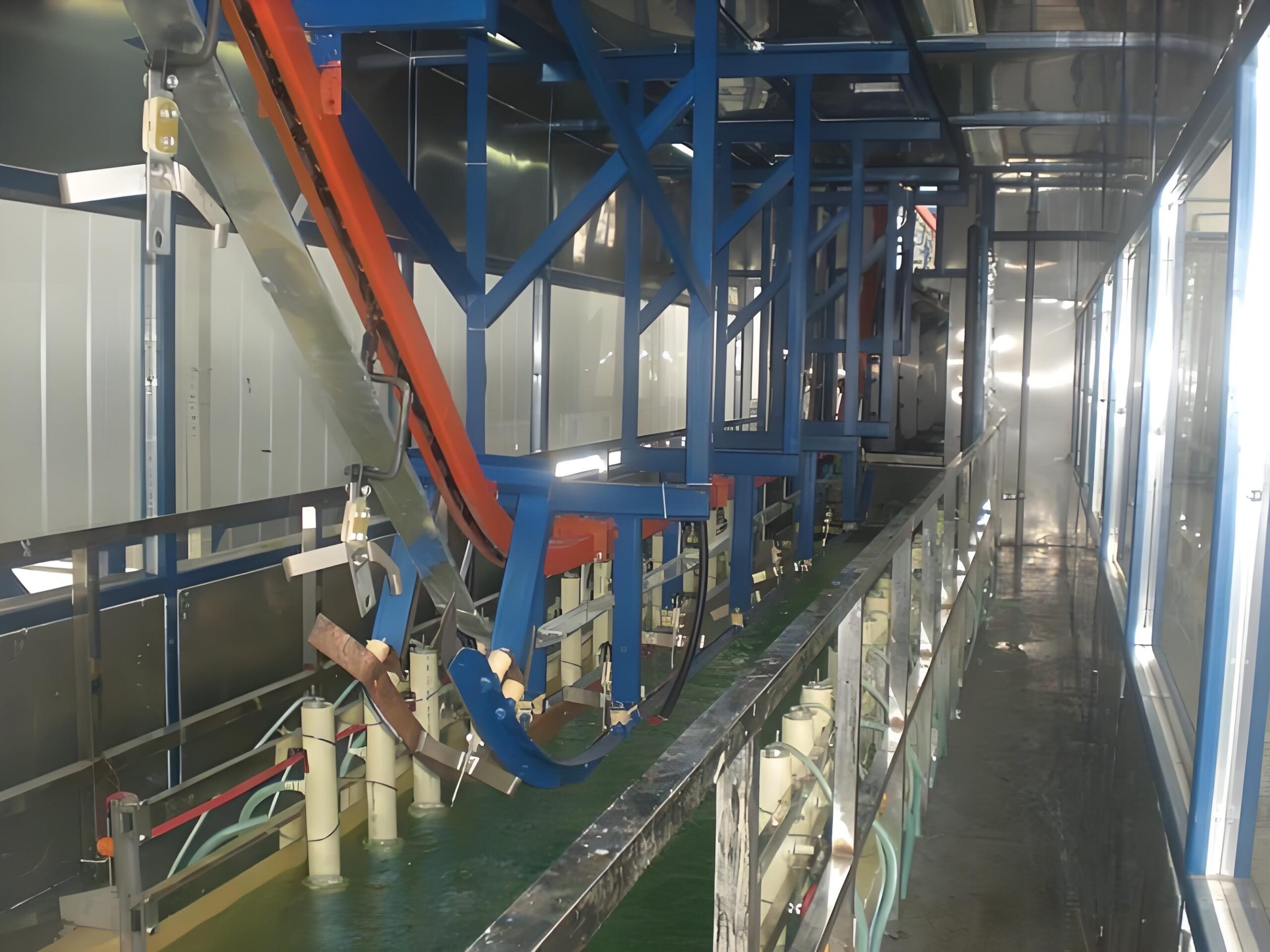
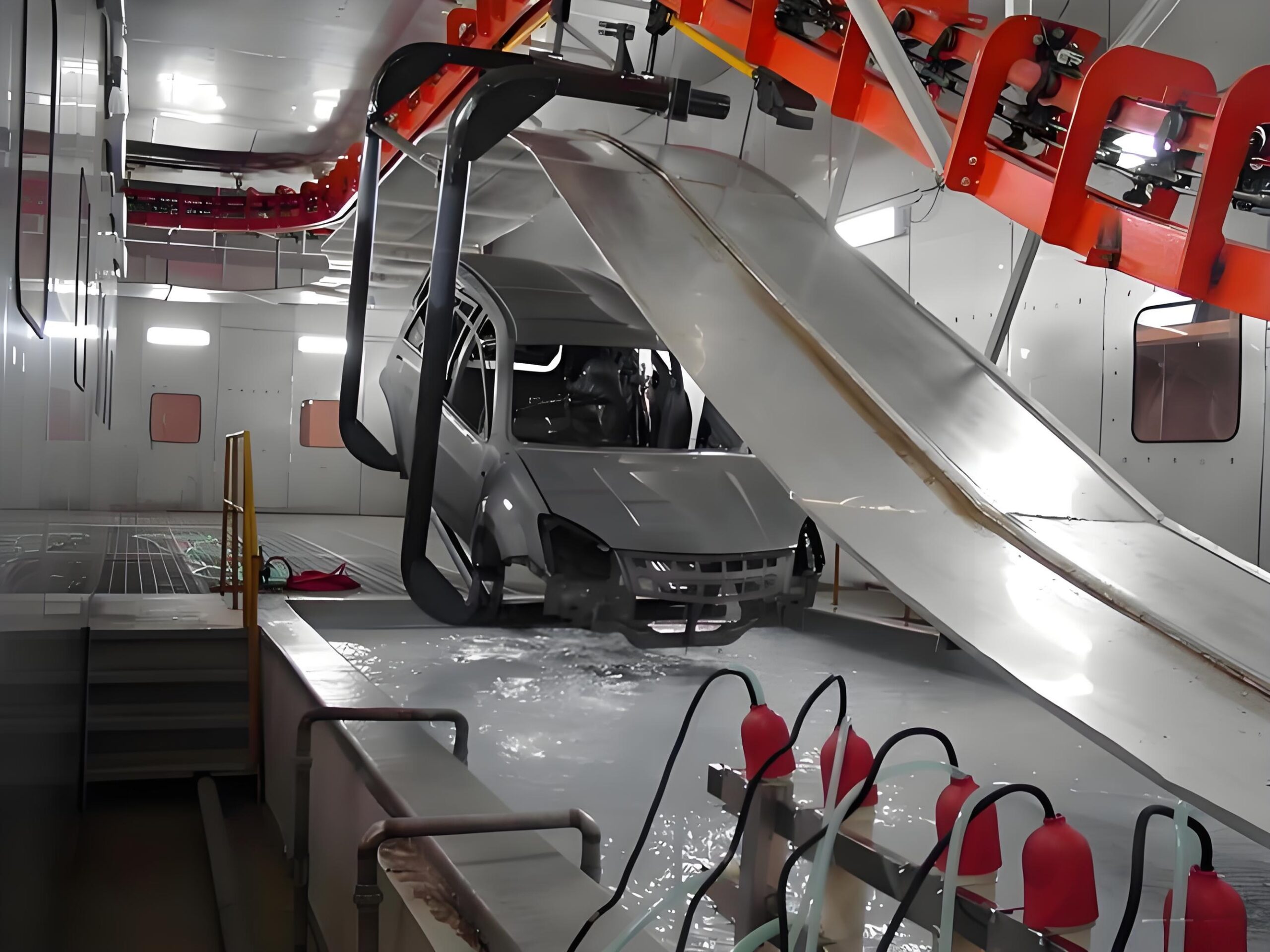
The automatic electrophoretic coating production line is widely used in the coating treatment of metal surfaces, especially in the production of automobiles, fearais tí, electronic products and metal products, with efficient, environmentally friendly and uniform coating effects. Electrophoretic coating evenly adheres paint particles to the surface of the workpiece through the action of an electric field, forming a high-quality coating.
1. Pre-treatment stage
Pre-treatment is the first step in electrophoretic coating, with the aim of cleaning the surface of the workpiece and providing good adhesion to the coating. Pre-treatment typically includes the following steps:
Cleaning: Removes oil, dust, and stains from the surface of the workpiece. Common cleaning methods include spray washing, soaking, or ultrasonic cleaning.
Rust Removal and Pickling: For metal surfaces, use pickling solutions to remove rust, oxides, and contaminants, ensuring a smooth metal surface.
Phosphating treatment: Forms a phosphate film on the surface of the workpiece to increase the adhesion of the coating to the metal and prevent rust and corrosion.
Drying: After the workpiece is pre-treated, it needs to be dried to remove moisture and cleaning agents from the surface to ensure uniformity in subsequent coating.
The role of pretreatment is to provide a solid foundation for the coating, ensuring the adhesion and stability of the coating.
2. Electrophoretic coating stage
Electrophoretic coating is the core link of the automatic electrophoretic coating production line, in this stage, the paint particles are uniformly deposited on the surface of the workpiece through the action of an electric field. The main processes of electrophoretic coating are as follows:
Preparation of the electrophoresis tank and coating solution:
Electrophoresis solution: Electrophoresis solution is a water-based coating composed of water, resin, pigment and curing agent, and the paint particles are negatively charged. During the coating process, the paint particles in the electrophoresis solution are adsorbed to the surface of the workpiece by an electric field.
Electrophoresis tank: The electrophoresis tank is filled with electrophoresis solution, and the workpiece is immersed in the tank. At each end of the slot there are electrodes, where the workpiece usually acts as a cathode and the power supply provides it with a constant DC voltage. The coating particles in the electrophoresis solution have a negative charge, and they are adsorbed to the surface of the workpiece under the action of an electric field.
Electrophoresis Process:
Electric field action: The electric field moves the paint particles in the electrophoresis solution towards the surface of the workpiece. The paint particles are negatively charged, opposite to the positive charge or ground of the workpiece, and are therefore adsorbed to the surface of the workpiece, forming a uniform coating.
Coating uniformity: Due to the uniform distribution of the electric field, the paint particles can adhere evenly on the surface of the workpiece, ensuring the consistency of coating thickness. The electrophoresis process covers every part of the workpiece surface, including small areas and corners that are difficult to spray manually.
Control and Regulation:
Current and Voltage Control: The current and voltage during electrophoresis are crucial for the quality of the coating. The system ensures uniform deposition of the paint by automatically adjusting the voltage and amperage. Coating thickness is closely related to the intensity and duration of the current.
Coating Particle Deposition: The workpiece is immersed for a certain period under the action of an electric field, during which the coating particles uniformly deposit and adhere to the surface of the workpiece.
3. Curing Stage
After coating, the workpiece needs to be cured by heating to ensure the hardness and durability of the coating. The curing process is usually carried out in an oven, with the specific steps as follows:
Preheating Oven: After the workpiece comes out of the electrophoresis tank, it first enters the preheating oven. This stage mainly heats the workpiece to a certain temperature, removes surface moisture and solvents, and helps the coating soften and level.
Curing Oven: The workpiece then enters the curing oven, where the coating is cured at a high temperature of approximately 160–200°C. During the curing process, the resin and curing agents in the coating undergo a chemical reaction, forming a strong and durable coating. The curing time is usually 15-30 minutes, depending on the type of coating and the thickness of the workpiece.
Cooling: The cured workpiece needs to gradually cool down through a cooling channel to ensure the stability and hardness of the coating.
The cured coating has excellent corrosion resistance, scratch resistance, and high impact resistance, ensuring the product’s service life.
4. Quality Inspection and Packaging
The coated workpieces must undergo strict quality inspection to ensure the coating meets standards. The inspection process includes:
Appearance Inspection: Check whether the coating is uniform and smooth, and look for defects such as bubbles, runs, or scratches.
Coating Thickness Measurement: Use a coating thickness gauge to measure the thickness of the coating to ensure it meets the specified standards.
Adhesion Test: Through pull tests, scratch tests, etc., ensure the coating adheres strongly to the workpiece surface to prevent peeling.
The fully automated electrophoretic coating production line ensures the uniformity, adhesion, and durability of the coating through precise processes and automated controls. Stages such as pretreatment, coating, curing, and quality inspection are carefully controlled to ensure that each workpiece meets high coating standards. This production line is widely used in industries such as automotive, fearais tí, and electronics, offering high efficiency, environmental friendliness, low cost, and high quality.